A Practical Guide to Cold-Rolled vs Hot-Rolled Steel
“Hot or cold?” might sound like the question you get when you order your morning coffee. But it’s also one that manufacturers ask every day as they consider cold-rolled vs hot-rolled steel. Choosing the right type of steel affects everything from cost and lead time to durability, machinability, and final appearance. But knowing the right answer isn’t always straightforward.
That’s where we come in.
As a precision machine shop trusted for material guidance and design support, Accurate CNC helps customers make informed decisions long before a part hits the machine. Let’s break down these two options so you can feel confident selecting the best fit for your next project.
Hot-Rolled Steel: How It’s Made
Hot-rolled steel is processed at high temperatures and then allowed to cool. As it cools, minor distortion can occur, and this can lead to slightly irregular shapes and sizes in the final product.
Hot-rolled steel typically has less residual stress than cold-rolled, making it the more flexible and easily bent option.
As a result of the process, the material often has:
A scaly, textured finish
Rounded edges on bar stock
A dry, non-oily surface
Hot-rolled steel is commonly used in the construction industry for structural beams and rebar, and the transportation industry for railroad tracks and some automotive parts.
When Hot-Rolled Steel Is the Right Choice
If cost and speed are top priorities, and your part does not require tight tolerances, hot-rolled steel can be a good fit. The simplified process keeps costs down and lead times short.
If appearance matters, hot-rolled steel may require additional finishing like grinding or sandblasting, which can raise the final cost. But for structural, non-precision components, it’s an efficient pick.
Cold-Rolled Steel: How It’s Made
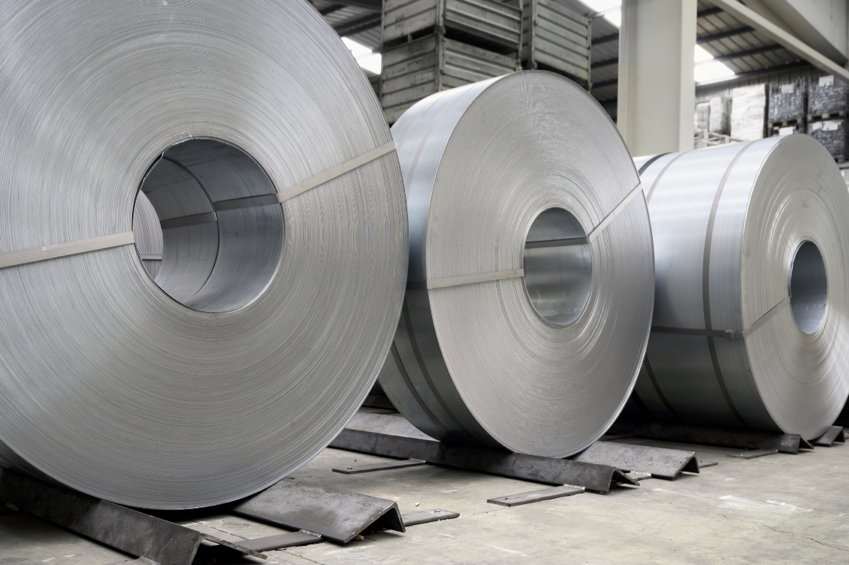
Cold-rolled steel is produced by putting hot-rolled steel through extra processing steps. It’s compressed and thinned through rollers, increasing its strength, hardness, dimensional accuracy, and surface finish quality. Cold-rolled steel eliminates the need for many finishing operations since it already has a clean, refined appearance.
You can often identify cold-rolled steel by its smooth finish, sharp edges on bar stock, and lightly oiled surface.
When Cold-Rolled Steel Is the Right Choice
Cold-rolled steel is ideal when your part needs:
Tight or exact dimensions
Higher strength and durability
A smooth, aesthetic appearance
Consistent performance
It’s used in electrical components, home appliances, car door panels, fuel pumps, furniture, and precision assemblies.
While cold-rolled steel costs more upfront, it may lower your total part cost because it typically doesn’t require secondary finishing. And for tight-tolerance machining, cold-rolled steel is often the go-to material.
Cold-Rolled vs Hot-Rolled Steel: What’s Best for Your Project?
Now that you know the ins and outs of cold-rolled vs hot-rolled steel, it’s time to decide which is ideal for your part. Start by asking yourself these questions:
Does my part require long-term durability?
Will my part be outdoors?
Are aesthetics more important than cost savings?
Do I need a quick turnaround?
Are tight tolerances required?
What matters most: durability, cost, aesthetics, or precision?
After considering these questions, you’ll probably have your answer. But if you need more guidance, Accurate CNC Services is ready to help.
Real-Life Applications With Accurate’s Precision Machining
We help customers select the right material by evaluating the details of each part, including geometry, function, environment, cost sensitivity, and machinability.
Here’s how we generally approach the question:
Hot-rolled steel is our recommendation when cost and lead time matter most, especially for simple parts or components that don’t require tight tolerances.
Cold-rolled steel is preferred for structural or critical components where rigidity and precision are essential.
Examples from our shop:
Our laser cutting services handle both hot-rolled and cold-rolled steel, commonly used for machine covers, brackets, and enclosures.
When parts require bending, we often use hot-rolled steel on our press brake because it offers better flexibility.
For rigid parts that must hold their shape, we use cold-rolled steel because it resists bending.
Material selection can feel complicated. But when you take advantage of our experience, it doesn’t have to be.
A Trusted Partner In Problem-Solving
Hopefully we helped settle the “hot or cold?” question. But we’re not just experts in cold-rolled vs hot-rolled steel. Whether you need help with material selection, design choices, or cost-effective solutions, our precision machine shop is here to support your project from idea to finished part.
Request a quote from Accurate CNC and get the material guidance and machining expertise you need.