Avoid Costly Delays: Accurate’s Guide to Complete Welded Part Drawings
When placing an order for a welding project, it’s important to communicate several details upfront, including critical features, tolerances, and finishing requirements. This will ensure the welding process can begin quickly and your parts move through production without delays.
However, at Accurate CNC Services, we often see differences between what is shown on the part drawing and what the customer ultimately wants for the finished assembly. Here’s how to ensure your welded part drawings are complete so your production schedule stays on track and your components function exactly as you need them to.
The More Information the Better
Welding is anything but simple, and because of this, clear communication on drawings makes a significant difference. One of the most common challenges we see at Accurate is missing or unclear weld callouts. When that happens, our team must pause production to ask questions before work can begin, increasing turnaround time.
Providing as much information as possible when placing an order helps eliminate unnecessary back-and-forth. In addition to all critical features and required tolerances, be sure to clearly identify:
Welds for all required joints in the assembly
Every joint that requires welding should be clearly called out. For more complex projects, a separate welding drawing can be helpful for clarifying exactly where welds are needed.
Finishing requirements
If welds need to be ground flush, be sure to specify this. If they do not need to be flush, avoid calling it out unnecessarily because grinding welds will increase lead time and cost.
Interior welds
If interior welds are required, clearly noting them early helps prevent confusion later in the process.
Vent holes for sealed tubing
If plates are welded to the ends of tubes, vent holes may be necessary. Without them, pressure can build up inside the tube.
If you are unfamiliar with welding symbols or detailed weld callouts, that’s okay. Including notes that explain your intent will allow us to ask educated questions and get your parts into production faster.
When it comes to welded assemblies, our Idaho machine shop believes there is no such thing as overcommunication.
Other Important Considerations
Small, Internal Spaces Complicate Welding
At our precision machine shop, we sometimes see welds specified in small, internal spaces where it is difficult or impossible to physically access the joint with welding equipment. In these situations, a bolt-together assembly might be necessary.
Preventing Warping
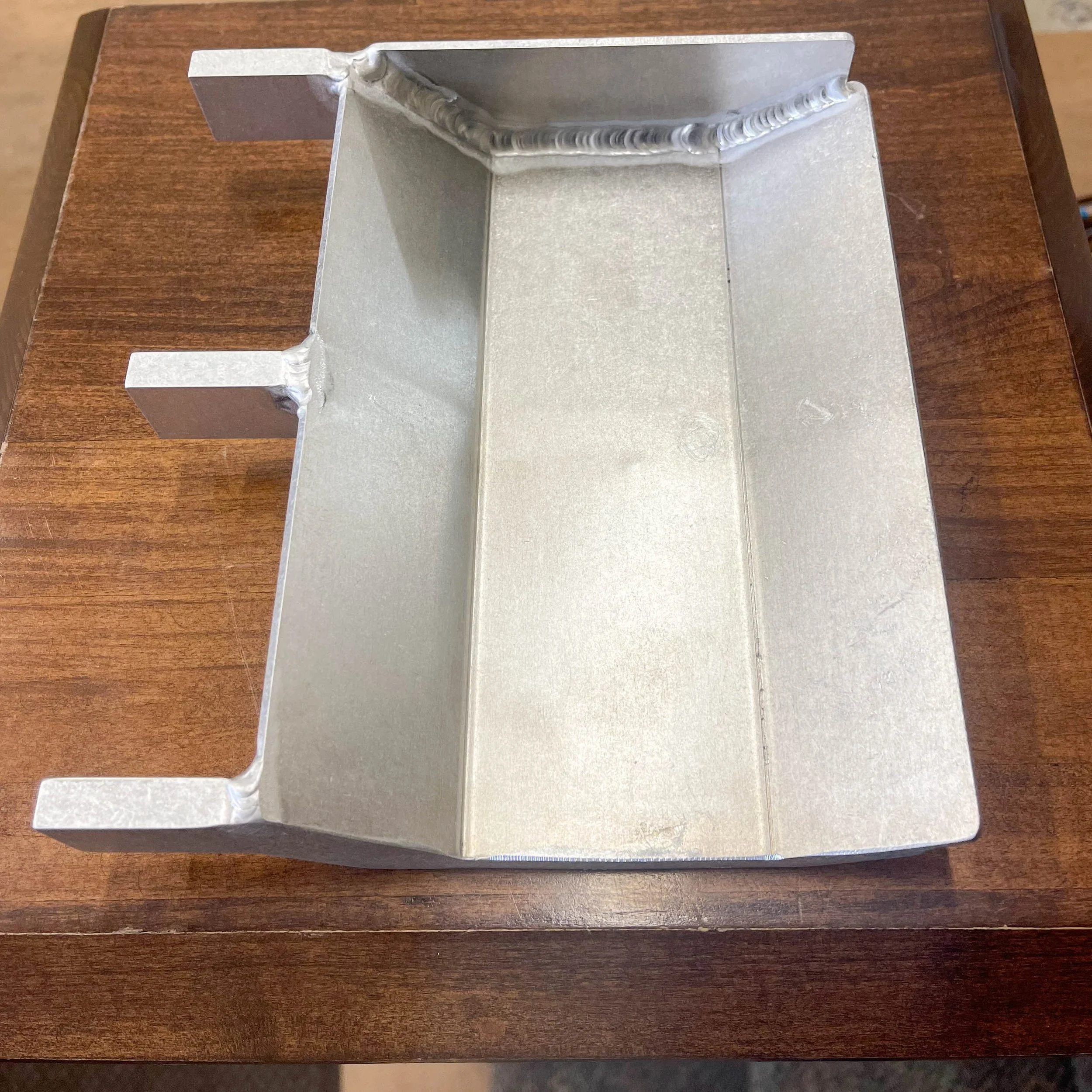
Welding introduces significant heat into a part, which can cause distortion, especially on large, complex assemblies. This can impact final part tolerances if not properly managed.
To help control warping, engineers often specify skip welds, which space out welds instead of running a continuous bead. This approach reduces heat buildup and minimizes distortion.
If your assembly will undergo post-weld machining, it’s also important to consider material allowance. Enough material must remain so that final machining operations can achieve the required final dimensions, even if warping occurs during welding.
Collaboration Leads to Better Results
Every welded assembly is unique and design requirements can vary depending on material, geometry, and intended application.
Clearly communicating all weld requirements, tolerances, and finishing expectations from the beginning ensures your welded assemblies move smoothly through production and your final projects perform exactly as you need them to.
If you ever have questions about your welded drawings, please reach out to our team. We are happy to collaborate and let you know if we see any opportunities to simplify fabrication and prevent potential issues before production even begins.
For welded assemblies and precision manufacturing support, contact Accurate today.